Natural Remedies - Healing with Medicinal Herbs
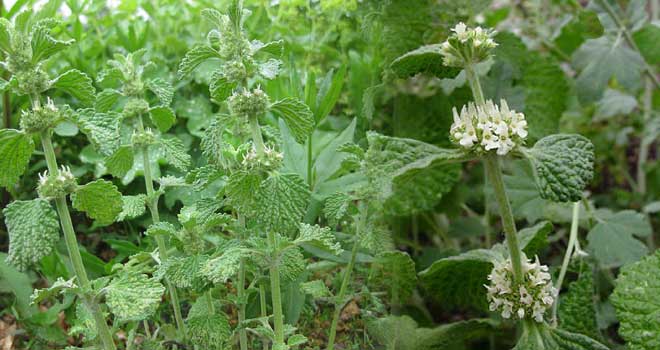
Horehound (Marrubium vulgare Lamiaceae)
Other Names: Common Horehound, White Horehound, White Grass
Horehound, native to the Mediterranean and commonly found in warm, sunny areas across Europe, particularly along rural roads, grows 30 to 60 centimeters tall with upright, hairy stems and wrinkled, shell-shaped leaves. In summer, small white flowers appear at the leaf-stem junctions, and the plant has an apple-like scent.
Parts for Use
Tops with Flowers
- Harvested in May and June during blooming.
- Dried and ground for use in infusions, decoctions, tinctures, and extracts.
Ingredients
Horehound flowers contain bitter diterpenes (marubin, premarubin, and marubic acid), flavonoids, alkaloids, and a small amount of essential oil, contributing to its medicinal properties.
Use in Treatment
Horehound is a traditional remedy for cough, recognized as an effective expectorant that dissolves and expels mucus while reducing respiratory inflammation, as confirmed by 1976 experiments. Its bitter compound, marubin, stimulates appetite and aids digestion. Externally, it treats purulent ulcers and slow-healing wounds. Animal studies suggest Horehound’s potential in managing high blood pressure.
Cultivation
Horehound thrives in well-drained, neutral to alkaline soil in sunny locations. It spreads easily, so plant it in an untidy garden area to control its growth.
Preparation and Dosage
For Internal Use (Indigestion and Cough)
- Tincture (1:4 in 25% alcohol): Add 10 to 20 drops to a glass of water and drink two to three times daily before meals.
- Infusion (for lack of appetite): Steep 1 to 2 grams of dried herbs in a cup of boiling water for 10 minutes, and drink three cups daily.
For External Use (Purulent Ulcers and Wounds)
- Compress: Boil 30 to 60 grams of dried herbs in one liter of water for three minutes, let stand for 10 minutes, soak a cloth in the decoction, and apply to the affected area twice daily.
Warnings
- Consult a healthcare professional before use.
- Avoid during pregnancy and breastfeeding.
- Large amounts may adversely affect heart function.