Natural Remedies - Healing with Medicinal Herbs
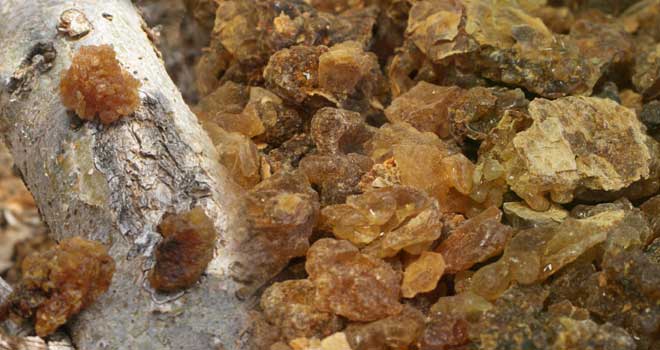
Myrrh (Commiphora myrrha, C. molmol Burseraceae)
Other Names: African Myrrh, Common Myrrh, Herabol Myrrh, Somali Myrrhor
Myrrh, a tree native to East Africa and Somalia, has a thick, twisted trunk and can grow up to five meters. Its small leaves consist of paired leaflets with a thorn at the tip. Tiny reddish-yellow flowers bloom in summer, and the bark, ranging from orange to gray, exudes a thick resin when cut during the rainy season.
Parts for Use
Resin
- Resin is collected from October to April by cutting the bark, allowing it to flow out, initially white, then turning yellow and brownish-red as it solidifies.
- The solidified resin forms transparent pieces used to prepare tinctures, valued as a biblical balm.
Ingredients
Myrrh’s essential oil contains furanosesquiterpenes, which have anti-inflammatory properties and give the resin its distinctive odor. The resin is rich in alcohols and triterpene acids.
Use in Treatment
Myrrh, one of the earliest medicinal plants, is valued for its antiseptic, anti-inflammatory, and analgesic properties. It is used to treat mouth inflammation, gum infections, and injuries from artificial teeth, as well as to reduce fever. Myrrh also helps clear nasal congestion and may relieve digestive issues caused by gas and muscle cramps.
Cultivation
Myrrh thrives in well-drained soil in a sunny position with a minimum temperature of 10°C, ideally in a heated greenhouse. It can be grown from seeds in spring or cuttings taken at the end of the growing season.
Preparation and Dosage
For External Use (Inflammation in the Mouth, Gum Infections, Injuries from Artificial Teeth)
- Tincture (1:5 in 90% alcohol): Add 1 teaspoon to a glass of water, use as a mouthwash or apply directly to the affected area up to 3 times daily.
Warnings
- Consult a healthcare professional before use.
- Use sparingly and occasionally during pregnancy and breastfeeding.
- Prolonged use may cause allergic reactions.
- Consult a doctor before use if you have a thyroid disorder.
- Never use internally.