Natural Remedies - Healing with Medicinal Herbs
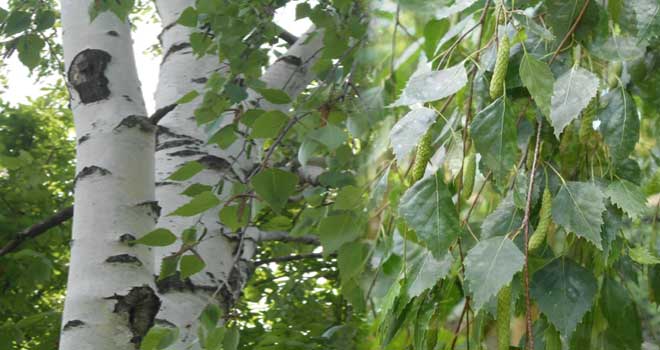
Silver birch (Betula pendula Betulaceae)
Other Names: Warty Birch, White Birch
Silver birch, an elegant deciduous tree growing 25–30 meters, is known for its smooth, silver-white bark and triangular, serrated leaves. Revered in folk traditions as a protective tree, it produces winged fruits in spring.
Parts for Use
Young Leaves and Bark
- Young leaves are harvested in spring and dried for infusions, powders, capsules, or tinctures.
- Bark is collected from felled trees, primarily for decoctions.
Ingredients
Leaves contain about 3% flavonoids (hyperoside, rutoside) with anti-inflammatory and diuretic properties, plus phenolic acids, tannins, vitamin C, and methyl salicylate. Bark shares similar compounds, including betulinic acid with antiviral properties.
Use in Treatment
Silver birch leaves are a potent diuretic and anti-inflammatory, effective for minor urinary tract infections (cystitis, urethritis), kidney stones, and swelling. They are often combined with restharrow, nettle, or meadowsweet for rheumatic pain relief. Externally, birch ointments soothe eczema and psoriasis. For warts, apply soaked fresh bark daily or use a bark decoction, leveraging antiviral betulinic acid and salicylates, which studies suggest may also combat HIV.
Cultivation
Grow in well-drained, acidic soil in sun or partial shade, using cuttings, grafting, seeds, or young trees.
Preparation and Dosage
For Internal Use (Urinary Tract Inflammation, Kidney Stones, Swelling)
- Infusion: Steep 2–3 g dried, chopped leaves in a cup of boiling water for 10–15 minutes. Add 1 g sodium bicarbonate per liter when cooled to 40°C. Drink 3 cups daily before meals.
- Capsules (50 mg dry extract): Take 1–2 capsules 2–3 times daily.
- Tincture (1:4 in 25% alcohol): Add 15 drops to water, take 3 times daily after meals.
For External Use (Skin Inflammation, Eczema, Psoriasis)
- Infusion: Steep 50 g dried leaves in 1 liter water, apply to skin 2–3 times daily.
Warnings
- Consult a healthcare professional before use.
- Avoid in children due to methyl salicylate content.
- Not recommended for those with kidney or heart issues.
- Use cautiously if prone to hay fever or allergies to celery or wormwood pollen.
- No adverse effects reported in therapeutic doses, but allergies are possible.