Natural Remedies - Healing with Medicinal Herbs
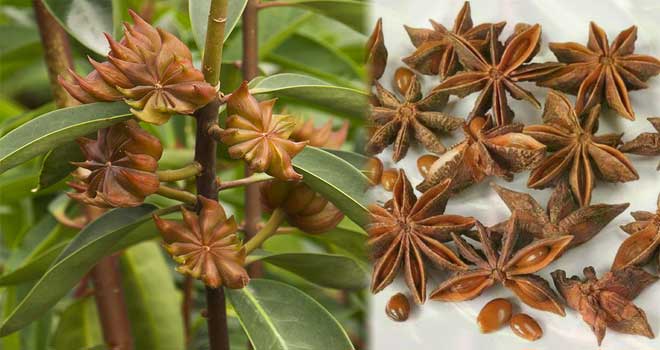
Star anise (Illicium verum Illiciaceae)
Other Names: Star Anise Seed, Chinese Star Anise, Badian
Star anise, an evergreen tree native to southern China and North Korea, grows up to 18 meters with fragrant white bark and pointed leaves. Its greenish-yellow flowers produce star-shaped fruits with a sweet, anise-like aroma, each containing 8–12 brown seeds.
Parts for Use
Fruits
- Harvested from trees at least 10 years old, while still green and unripe.
- Sun-dried to a reddish-brown color.
- Used in infusions and other herbal preparations.
Ingredients
The fruits contain 5–10% essential oil, rich in E-anethole, responsible for its medicinal properties.
Use in Treatment
Star anise, due to its anethole content, is traditionally used for indigestion, flatulence, and colic, soothing intestinal cramps and improving digestion. In small doses, it stimulates thirst and digestion; in large doses, it may overstimulate the nervous system, causing tremors or cramps. Its estrogenic effects, noted in a 1980 study in the Journal of Ethnopharmacology, promote menstruation, ease childbirth, and enhance breast milk production. It may also boost sexual desire. Star anise has diuretic and stimulant properties, aiding conditions like lumbago, and is used in cough remedies. Research from Japan and India confirms its antibacterial and antifungal properties, effective against infections.
Cultivation
Grow in well-drained, neutral to acidic soil in partial shade.
Preparation and Dosage
For Internal Use (Indigestion, Flatulence, Colic)
- Infusion: Steep 1 tsp dried fruit in a cup of boiling water for 10 minutes, strain, drink 2 cups daily before meals.
Warnings
- Consult a healthcare professional before use.
- Avoid confusion with toxic Japanese anise (Illicium anisatum), which has smaller, irregular fruits with a sharp, bitter taste, unlike the sweet, anise-like flavor of star anise.