Natural Remedies - Healing with Medicinal Herbs
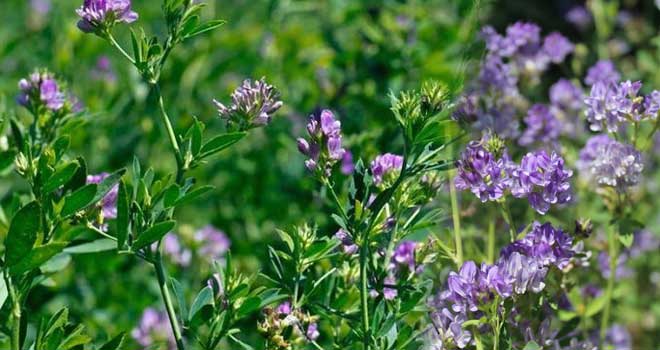
Alfalfa (Medicago sativa Fabaceae)
Other Names: Great Clover, Blue Clover, Lucerne
This perennial plant, often found growing wild at field edges, reaches a height of 60 centimeters. It bears purple-blue flowers during summer, with seed pods that are spirally bent. Beyond its medicinal uses, alfalfa is cultivated as livestock feed, and its young shoots can be added to salads.
Parts for Use
Leaves
- Leaves are harvested up to five times during the growing season when the plant begins flowering.
- They are used to prepare tinctures and dry or liquid extracts.
Ingredients
Alfalfa is a rich source of nutrients, including protein, calcium, and vitamins. It contains saponins that dissolve fats, coumarins, phenols, tannins, and unsaturated fatty acids. Alfalfa is also high in phytoestrogens, which can mimic the effects of the female hormone estrogen.
Use in Treatment
Due to its estrogenic effects, alfalfa helps regulate menstruation and stimulates breast milk production in breastfeeding women. Studies have shown that alfalfa protects against arteriosclerosis in experimental monkeys on high-cholesterol diets and effectively lowers blood cholesterol levels. Research from 2000 demonstrated that alfalfa, like coriander, eucalyptus, and pine, influences glucose metabolism, reducing excessive thirst and blood sugar levels. Its invigorating properties make it a popular choice for combating exhaustion and promoting weight gain during recovery. Alfalfa can also reduce nervous exhaustion and restlessness. In India, it is used as a coating for ulcers, while in Colombia, it is employed to treat coughs. It has therapeutic effects on stomach ulcers and has been used to address kidney stones.
Cultivation
Plant alfalfa in a sunny location with light, well-drained soil. Its blue flowers, rich in nectar, attract bees.
Preparation and Dosage
For Internal Use (Exhaustion, Nervous Restlessness, Malnutrition in Children)
- Tincture (1:4 in 25% alcohol): Add 20 drops to a glass of water and drink three times daily after meals.
Warnings
- Consult a professional before use.
- During pregnancy and breastfeeding, limit intake to amounts equivalent to a normal meal.
- Not recommended for individuals with immune disorders or rheumatic conditions.
- Do not use alfalfa to treat lupus.
- Alfalfa may cause photosensitivity; avoid sunbathing while using it.
- Alfalfa can alter blood count.
- Do not exceed recommended doses.
- No toxic properties of alfalfa have been identified to date.