Natural Remedies - Healing with Medicinal Herbs
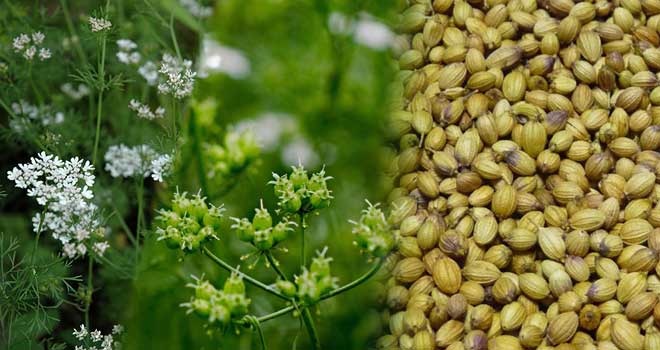
Coriander (Coriandrum sativum Apiaceae)
Other Names: Sowing Coriander, Chinese Parsley, Dhania, Cilantro
Coriander, recognizable by its distinct scent, is cultivated across Europe, India, and North Africa. This herbaceous annual grows up to 60 inches tall. In early spring, it blooms with tiny white or pink flowers forming umbrella-like inflorescences. By August, small, round, wrinkled seeds develop from these flowers.
Parts for Use
Leaves and Seeds
- Seeds are collected when fruits ripen and turn yellow, ideally in the morning to preserve beneficial properties.
- Fruits are sun-dried, ground to separate seeds, and further dried for use in powders, tinctures, or essential oil extraction.
- Fresh leaves, with antiseptic properties, aid digestion but are primarily used in culinary applications.
Ingredients
Coriander seeds contain up to 25% fatty oils, phenolic acids, and aliphatic aldehydes, contributing to their characteristic odor. The essential oil, rich in linalool, offers antibacterial, antispasmodic, and cough-suppressing properties.
Use in Treatment
Coriander’s healing properties, primarily in its seed-derived essential oil, regulate digestive juice secretion and alleviate bloating, making it effective for indigestion, diarrhea, and gastroenteritis. Animal studies suggest coriander seeds may lower blood cholesterol. The seeds are also believed to combat bacterial and fungal infections. Externally, coriander seed oil may soothe hemorrhoid pain and joint pain associated with rheumatism. Use for cholesterol, hemorrhoids, and joint pain requires medical supervision due to potential risks. Coriander is also traditionally used for flu, though evidence is limited and professional guidance is recommended.
Cultivation
Coriander thrives in light, well-drained soil and is sown in warm weather from late March to late April in a sunny, sheltered location.
Preparation and Dosage
For Internal Use (Indigestion, Diarrhea, Gastroenteritis)
- Infusion: Steep 10–30 g of seeds in 1 liter of boiling water for 10 minutes, strain, and drink 1 cup after each meal.
- Tincture: Add 40 drops to a glass of water and take 3 times daily.
Warnings
- Consult a healthcare professional before use, especially for cholesterol, hemorrhoids, joint pain, or flu.
- Avoid during pregnancy and breastfeeding.
- Coriander may cause abdominal pain, loss of appetite, or liver swelling in some cases.
- Never use pure coriander essential oil internally.