Natural Remedies - Healing with Medicinal Herbs
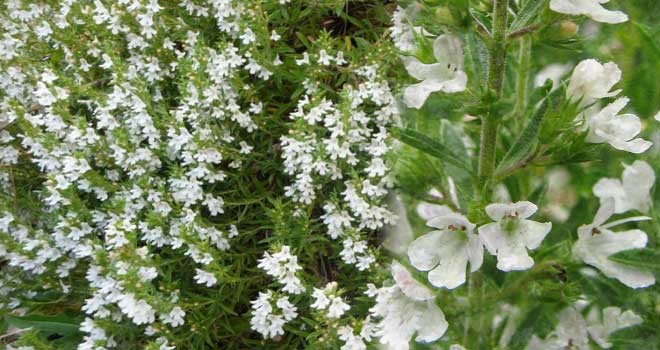
Savory (Satureja montana Lamiaceae)
Other Names: Winter Savory, Mountain Savory
Savory is a small, shrubby, woody perennial native to the well-drained karst regions of southern Europe. Its glossy, lance-shaped leaves and white or pink-tinged flowers make it a valued spice plant since the Middle Ages in Great Britain.
Parts for Use
Flower Tops and Leaves
- Harvested in summer as flowers begin to open.
- Dried flower tops are used as a spice, for infusions, or to extract essential oil.
Ingredients
Savory’s essential oil is rich in carvacrol and thymol, with varying monoterpene content depending on season and climate, contributing to its antiseptic and therapeutic properties.
Use in Treatment
Savory’s essential oil drives its therapeutic effects, traditionally used to strengthen the body and ease digestive issues like vomiting, bloating, and diarrhea. It is incorporated into pharmaceutical products for intestinal cramps, fungal infections, and bacterial infections. Its potent antiseptic properties make it effective externally for minor injuries, fungal skin infections, mouth ulcers, oral mucosa inflammation, and sore throat. A 1998 Japanese study suggested savory’s potential against HIV-1, highlighting its antimicrobial capabilities.
Cultivation
Sow seeds in well-drained, preferably alkaline soil in a sunny location.
Preparation and Dosage
For Internal Use (Vomiting, Bloating, Diarrhea)
- Infusion: Steep 20 g dried flower tops in 1 liter of boiling water for 10 minutes, strain, and drink 2–3 cups daily.
For Internal Use (Bronchitis, Cystitis)
- Essential Oil: Use only under medical supervision.
For External Use (Minor Injuries, Fungal Skin Infections, Mouth Ulcers, Sore Throat)
- Infusion: Steep 30 g dried flower tops in 1 liter of boiling water for 10 minutes, strain, and apply directly to cleanse affected areas.
Warnings
- Consult a healthcare professional before use.
- Avoid savory preparations during pregnancy and breastfeeding.
- Use essential oil internally only under medical supervision.
- External use of essential oil may cause skin irritation.