Natural Remedies - Healing with Medicinal Herbs
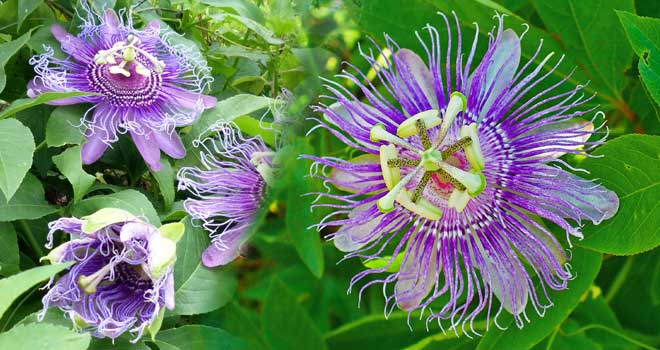
Passionflower (Passiflora incarnata Passifloraceae)
Other Names: Maypop, Purple Passionflower, True Passionflower, Wild Apricot, Wild Passion Vine
Passionflower, a South American climber, grows up to 9 meters with tendrils and three-lobed, serrated leaves. Its striking flowers, with white petals, purple or pink filaments, and large anthers, distinguish it from fruit-bearing cultivated varieties.
Parts for Use
Leaves and Stems
- Above-ground parts are harvested in late summer.
- Dried and used for infusions, tinctures, liquid extracts, and powders.
Ingredients
Passionflower contains trace amounts of maltol, indole alkaloids, and up to 2.5% flavonoids, contributing to its calming effects.
Use in Treatment
Passionflower is effective for insomnia, anxiety, muscle cramps, vegetative dystonia, palpitations, and nervous digestive issues. Its mild sedative properties make it suitable for children. A 1974 study confirmed the calming effects of maltol and ethylmaltol, with flavonoids contributing similarly.
Cultivation
Grow passionflower from seeds in spring or semi-woody cuttings in summer, in well-drained sandy soil in a sunny location.
Preparation and Dosage
For Internal Use (Insomnia)
- Infusion: Steep 1 teaspoon of dried herbs in 1 cup of boiling water for 5–10 minutes, strain, and drink 1 cup before bedtime.
- Tincture (1:8 in 25% alcohol): Take 25–75 drops in a glass of water 3 times daily.
For Internal Use (Vegetative Dystonia, Palpitations, Nervous Disorders)
- Infusion: Steep 1 teaspoon of dried herbs in 1 cup of boiling water for 5–10 minutes, strain, and drink 1 cup 3 times daily.
- Tincture (1:8 in 25% alcohol): Take 25 drops in a glass of water 3 times daily.
Warnings
- Consult a healthcare professional before use.
- Avoid passionflower preparations during pregnancy and breastfeeding.
- No harmful side effects have been observed when taken in prescribed amounts.