Natural Remedies - Healing with Medicinal Herbs
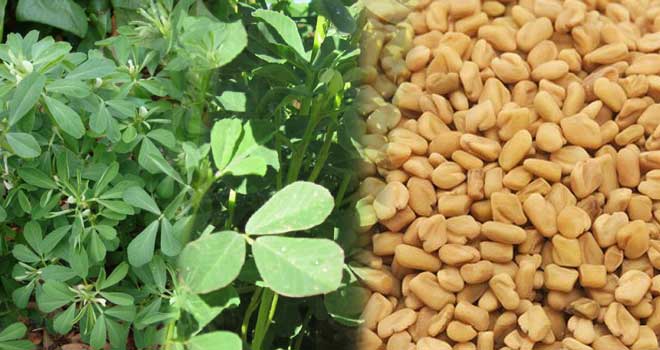
Fenugreek (Trigonella foenum-graecum Fabiaceae/Leguminosae)
Other Names: Greek Hay, Goat Horn
This annual plant, originating from the Black Sea region, is now widely cultivated in India, North Africa, and the United States. Growing to about half a meter, it has a strong odor, oval leaves, and triangular flowers ranging from yellow to bright purple. Its long, curved seed pods contain numerous brown seeds, commonly used in Indian cuisine as a spicy curry ingredient.
Parts for Use
Seeds
- Seed pods are harvested when ripe in August and September.
- The pods are discarded, and the seeds are used to make liquid extracts, tinctures, or ground into powder or tablets.
Ingredients
The primary component of fenugreek is mucilage, a soluble fiber that absorbs water to form a gelatin-like substance. The seeds also contain coumarins, steroidal saponins that mimic hormones, volatile oil responsible for their aroma, and alkaloids.
Use in Treatment
Fenugreek acts as a tonic, combating fatigue and aiding recovery. Its mucilage content protects the mucous membrane, soothing digestive disorders like indigestion and constipation by lubricating the colon. A 2001 study in Jaipur, India, showed that fenugreek lowers blood sugar in type 2 diabetes by reducing insulin resistance and removing excess triglycerides. A 2002 study confirmed its effectiveness against stomach ulcers. Fenugreek is prescribed for loss of appetite, and its fiber and saponins lower blood cholesterol and lipids. The hormonal properties of fenugreek can help treat impotence in men. Externally, fenugreek balm relieves skin inflammation and associated pain.
Cultivation
Sow fenugreek seeds in well-drained soil in a sunny location.
Preparation and Dosage
For Internal Use (Fatigue and Weight Loss)
- Powder: Take 2 grams in a little water three times daily.
- Tincture (1:3 in 25% alcohol): Add 20 drops to a little water and take three times daily (note: the solution has a bitter taste).
- Tablets (500 mg): Take one tablet four times daily.
For External Use (Skin Inflammation)
- Spread (using powder): Apply to the affected area, changing the dressing every three to four hours.
Warnings
- Consult a healthcare professional before use.
- Avoid fenugreek during pregnancy and breastfeeding in amounts larger than those used in food.
- Do not take fenugreek preparations if using anticoagulants.
- Due to its steroidal compounds, fenugreek should not be given to children before puberty.
- If you have diabetes, consult your doctor before using fenugreek preparations.
- Fenugreek is considered non-toxic and generally safe for use.