Natural Remedies - Healing with Medicinal Herbs
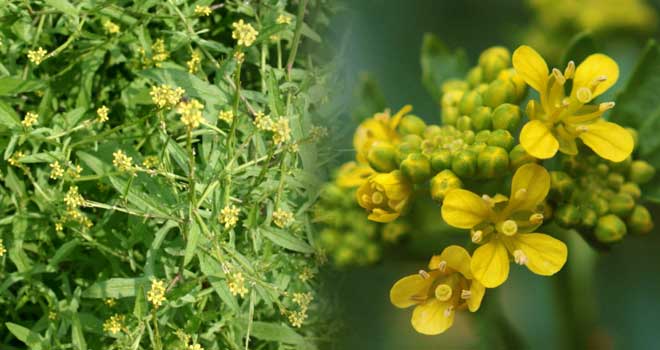
Hedge mustard (Sisymbrium officinale, ranije Erysimon officinale Brassicaceae)
Other Names: Common Hedge Mustard
Hedge Mustard, a wild plant often found along rural roads, features hairy, blackish-green stems growing up to 60 centimeters, with serrated leaves of varying sizes. Its tiny yellow flowers, blooming from April to November, are arranged in a cross pattern. The elongated fruit clusters contain pungent yellow seeds. With a taste and smell similar to black mustard, its leaves are occasionally used as a spice.
Parts for Use
Whole Plant, Leaves, and Tops of Flower Stalks
- Leaves and flowers are harvested in spring and summer.
- Typically dried for infusions and tinctures, though fresh leaves and flowers can also be used.
Ingredients
Hedge Mustard contains essential oil rich in sulfur compounds, primarily glucosinolates, which contribute to its expectorant properties. The seeds also contain small amounts of cardenolides.
Use in Treatment
The sulfur compounds in Hedge Mustard’s essential oil act as expectorants, helping to expel mucus and soothe coughs, sore throats, and respiratory issues like catarrh, bronchitis, hoarseness, and voice loss due to airway inflammation. Known in France as the “singer plant,” it is a common ingredient in cough syrups for its ability to restore vocal strength. Hedge Mustard also stimulates digestive juice secretion and acts as a diuretic, supporting digestive health and detoxification. Recent Japanese research highlights the effectiveness of its sulfur compounds in protecting the immune system from bacterial infections.
Cultivation
Hedge Mustard can be grown from seeds sown in spring or fall. It adapts to both moist and dry soils, whether alkaline or acidic, and prefers sunny or lightly shaded locations.
Preparation and Dosage
For Internal Use (Hoarseness, Laryngitis, Pharyngitis, Respiratory Inflammation)
- Infusion: Steep 5 grams of dried herbs in one cup of boiling water, cover, let stand for 10 minutes, strain, and drink two to four cups daily.
- Tincture: Take 30 drops in a glass of water three to four times daily.
For External Use (Voice Loss)
- Gargling Water: Prepare the infusion and gargle three to four times daily.
Warnings
- Consult a healthcare professional before use.
- Do not use during pregnancy or breastfeeding.
- Not suitable for children.
- Excessive use may cause side effects, particularly a slowed heart rate.