Natural Remedies - Healing with Medicinal Herbs
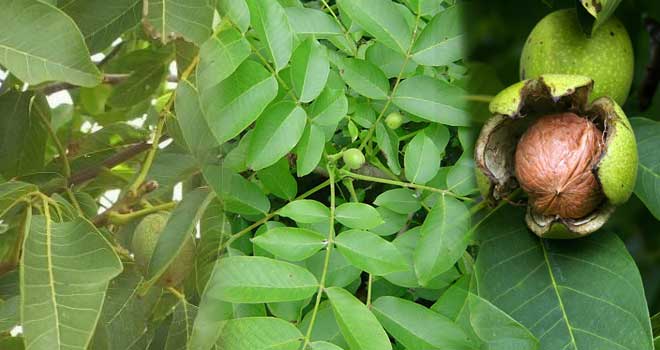
Walnut (Juglans regia Juglandaceae)
Other Names: Persian Walnut, English Walnut, Carpathian Walnut, Common Walnut
The walnut tree, with its large trunk and robust branches, can reach up to 25 meters in height. In early spring, male flowers appear as long tassels on last year’s shoots, while new shoots bear small female flower inflorescences. Its leaves, composed of 6–9 leaflets, transition from red to green. The fruit, a walnut, is encased in a smooth shell that turns from green to brown when ripe.
Parts for Use
Leaves
- Harvested in June and July, dried quickly at 40°C to preserve active compounds.
- Used for infusions, tinctures, and liquid extracts.
Ingredients
Walnut leaves are rich in medicinal flavonoids, naphtaquinone (juglone), hyperoside, quercetin, vitamin C, and essential oils, contributing to their therapeutic properties.
Use in Treatment
While walnuts are often associated with improved concentration and memory due to their brain-like appearance, the leaves hold the primary medicinal value. Containing tannins and antibacterial juglone, they are used to treat diarrhea and intestinal infections, boost immunity, and improve circulation. Walnut leaves strengthen keratin in the skin’s surface layer, making them effective for acne, eczema, skin infections, and ulcers.
Cultivation
Grow from seeds or purchase a young tree, planting in rich, well-drained, acidic soil in a sunny location.
Preparation and Dosage
For Internal Use (Diarrhea, Intestinal Infections)
- Infusion: Steep 10 g dried leaves in 1 liter of boiling water for 15 minutes, strain, drink 3–5 cups daily.
For External Use (Acne, Eczema, Skin Infections, Ulcers)
- Creams, Gels, Soaps: Apply regularly to affected areas.
Warnings
- Consult a healthcare professional before use.
- Avoid exceeding recommended doses, though no harmful side effects have been reported.