Natural Remedies - Healing with Medicinal Herbs
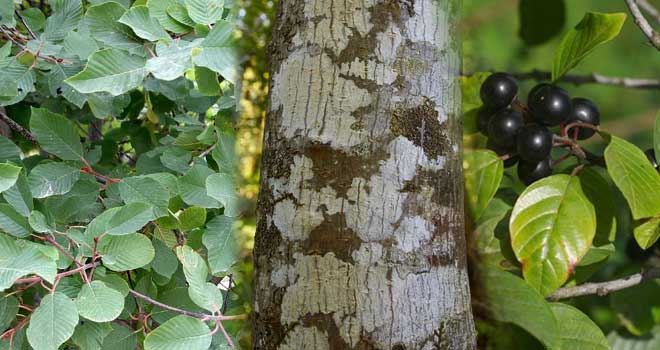
Cascara (Rhamnus purshiana Rhamnaceae)
Other Names: Cascara Buckthorn, Cascara Sagrada, Bearberry
This evergreen tree, native to the west coast of the United States, is also cultivated in East Africa due to similar dry and hot climates. It grows up to twelve meters tall, with oval, pointed leaves featuring prominent straight veins. The fruit is a black, poisonous berry containing a single seed. The brownish bark is speckled with whitish cavities.
Parts for Use
Bark
- Bark is collected only from cultivated trees, never from wild buckthorn, during summer, preferably from three-year-old trees, and then dried.
- Fresh bark, like that of its relative alder buckthorn (Rhamnus frangula), is poisonous.
- After drying and grinding, the bark is used in infusions and pharmaceutical preparations.
Ingredients
The active ingredients in cascara bark are hydroxyanthraquinone glycosides, known as cascarosides, which provide a laxative effect.
Use in Treatment
Cascara bark has laxative or purgative effects depending on the dosage, achieved by influencing water and electrolyte absorption while stimulating intestinal contractions. It is prescribed to alleviate symptoms of indigestion and must be taken as directed by a doctor. Cascara bark may also benefit liver function. A 2000 study by Chinese scientists demonstrated that the glycoside emodin reduces liver fibrosis in rats.
Cultivation
Cascara can be propagated from mature seeds, soft stem cuttings, or layering. It thrives in well-drained soil in sunny or partially shaded locations.
Preparation and Dosage
For Internal Use (Constipation and Liver Disorders)
- Cascara bark should only be used as directed by a doctor. Although some cascara products are available over-the-counter, consult a doctor or herbalist to avoid exacerbating existing conditions.
Warnings
- Consult a healthcare professional before use.
- Due to its potency and potential side effects, cascara should not be used without medical supervision.
- Cascara is not suitable for individuals without diagnosed intestinal pain, inflammation, or constipation.
- Do not exceed the prescribed dose or combine with other laxatives.
- Limit use to 8–10 days to avoid dependency, intestinal pain, electrolyte imbalance, or low blood potassium levels.
- Cascara is not recommended for pregnant or breastfeeding women or children under 15.