Natural Remedies - Healing with Medicinal Herbs
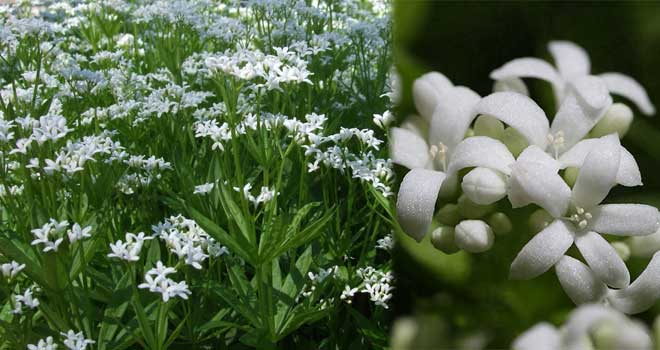
Woodruff (Asperula odorata (Galium odoratum) Rubiaceae)
Other Names: Sweet Woodruff, Wild Baby's Breath, Sweetscented Bedstraw
Woodruff, a low-growing perennial, thrives in forests and shady hedges on cold, clay soil. Its erect stems bear 6–8 star-shaped, bright green, oval leaves. In early summer, delicate white flower inflorescences bloom atop stems, producing tiny, hairy, rounded fruits.
Parts for Use
Leaves, Stems, and Flowers
- Harvested during blooming season in May and June.
- Tied into bundles and dried, developing a refined aroma.
- Used to prepare infusions.
Ingredients
Contains coumarins with calming effects and a pleasant aroma when dried, and asperuloside, which provides anti-inflammatory properties.
Use in Treatment
Woodruff’s coumarins offer anticonvulsant and sedative effects, making it effective for nervous anxiety, insomnia, and irritability. It aids digestive issues like stomach cramps, slow digestion, bloating, and vomiting, which can be linked to anxiety. Believed to strengthen blood vessels, it’s used for varicose veins and related inflammation. Recent animal studies confirm its benefits. Woodruff also acts as a diuretic and supports liver health.
Cultivation
Prefers moist, neutral to alkaline soil in shady areas. Harvest wild plants or grow from seeds sown in late June or early August.
Preparation and Dosage
For Internal Use (Nervous Anxiety, Insomnia, Stomach Cramps, Indigestion)
- Infusion for Anxiety or Digestive Issues: Steep 10 g dried aerial parts in 1 liter of boiling water for 10 minutes, strain, drink 2–3 cups daily.
- Infusion for Insomnia: Steep 10 g dried aerial parts in 1 liter of boiling water for 10 minutes, strain, drink 1 cup 30 minutes before bedtime.
Warnings
- Consult a healthcare professional before use.
- Avoid during pregnancy and breastfeeding.
- Do not use with medications for circulatory disorders.
- Excessive use may cause internal bleeding.