Natural Remedies - Healing with Medicinal Herbs
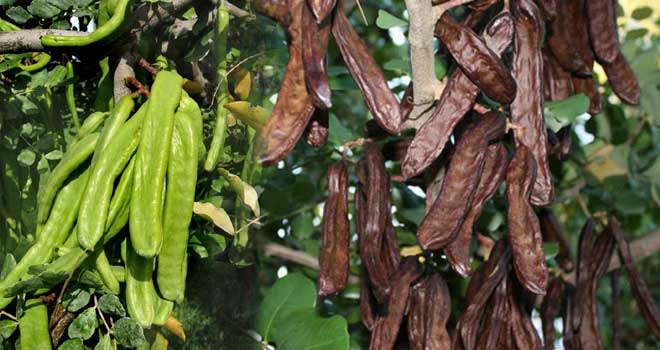
Carob (Ceratonia siliqua Caesalpinaceae)
Other Names: Common Carob, Tame Carob, Sweet Crust, St. John’s Pod
Originating from Palestine and Syria, carob is a large evergreen tree found in Mediterranean regions, growing up to twenty meters tall. According to biblical records, John the Baptist consumed carob in the desert, earning it the name "St. John’s pod." Its tiny, reddish, petal-less flowers form vibrant inflorescences. The fruit is a large, purple-brown pod with fleshy pulp containing eight to twelve seeds.
Parts for Use
Pods and Seeds
- Seeds are soaked to soften, then the outer layer and germs are removed.
- The remaining protein or albumen is ground to produce carob resin.
- Carob flour is obtained by drying and grinding the pulp from the pod.
Ingredients
Carob primarily consists of sugars and tannins, with approximately ninety percent of the pod composed of sugar-based substances and soluble fiber. It is rich in mucilage, which soothes inflamed mucous membranes. The pod’s pulp contains a high percentage of soluble sugars and tannins.
Use in Treatment
Carob preparations are effective for treating diarrhea, indigestion, and heartburn. Carob flour, mixed with sunflower seeds and rice flour, creates a mild preparation suitable for children with diarrhea. A 1989 Belgian study found that children recovered faster when given carob pod powder, likely due to tannins that neutralize toxins and inhibit bacterial growth. A 1998 Turkish hospital study confirmed that carob bean juice helps combat diarrhea in children and soothes intestinal irritation. Mucilage and resin are used in mild preparations for vomiting, suitable for children and pregnant women. Carob resin serves as a diet food and chocolate substitute, enhancing nutrient content without adding fat. A 2002 study showed carob can improve lipid levels in overweight individuals.
Cultivation
Carob thrives in the warm Mediterranean climate and tolerates dry soil. It is grown outdoors in suitable conditions.
Preparation and Dosage
For Internal Use (Diarrhea and Vomiting)
- Carob Flour (Diarrhea): Take 20–30 grams daily, mixed with lukewarm water or milk. To avoid throat irritation, add a teaspoon of flour to the mixture. Consult a doctor before treating children.
- Carob Resin (Vomiting, Adults Only): Mix one teaspoon of resin in a glass of water and drink in the evening.
Warnings
- Consult a healthcare professional before use.
- Seek medical advice before treating children.
- No adverse side effects have been reported with therapeutic doses of carob-based preparations.