Natural Remedies - Healing with Medicinal Herbs
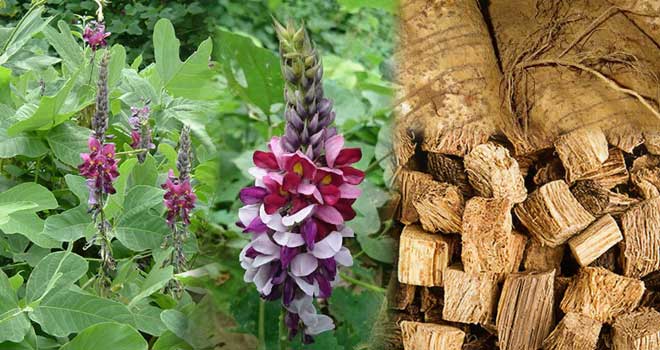
Pueraria (Pueraria lobata Fabaceae)
Other Names: Kudzu, Japanese Arrowroot, Chinese Arrowroot
Native to semi-tropical Asia, Pueraria lobata is a climbing vine that can grow up to 30 meters. It has dark green, trilobed leaves on long stalks, yellowish-brown cylindrical roots, and seed pods with black seeds. Used in Chinese medicine since 200 BC, it is also widely cultivated for culinary purposes, particularly as a thickening agent.
Parts for Use
Roots and Leaves
- Leaves are harvested in autumn, and roots in spring or fall, then dried for decoctions, powders, or extracts.
- Boiled roots and leaves are used to thicken jellies in cooking.
Ingredients
Pueraria contains isoflavonoids (daidzein, daidzin, puerarin), coumarins, and saponins, contributing to its medicinal properties.
Use in Treatment
Pueraria supports liver health and aids alcohol metabolism. A 1998 Japanese study confirmed its liver-protective effects, likely due to saponins, while a 1998 U.S. study showed isoflavonoids (puerarin, daidzin, daidzein) reduced alcohol consumption in rats. Its estrogen-like effects help balance hormones during menopause. Pueraria also relieves muscle pain, aids digestion, and treats colds and flu. By enhancing blood flow to the heart and brain, it supports the management of angina pectoris and high blood pressure.
Cultivation
Grow Pueraria in well-drained soil in a sunny location. Sow pre-soaked seeds in spring at 13–18°C for optimal germination.
Preparation and Dosage
For Internal Use (Liver Disease, Menopause, Alcohol Dependence)
- Decoction: Boil 10 g of crushed root in 500 ml water, reduce by half over low heat, strain, and drink half a cup 4 times daily.
- Powder: Take 500 mg 3–6 times daily.
- Dry Extract: Take 300 mg 3–6 times daily.
- Liquid Extract: Add 60 drops to a glass of water, take 3–6 times daily.
Warnings
- Consult a healthcare professional before use.
- Seek medical advice for severe conditions.
- No harmful side effects have been reported.