Natural Remedies - Healing with Medicinal Herbs
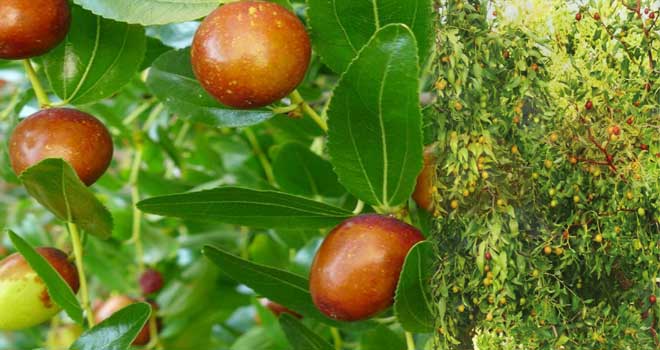
Jujube (Ziziphus jujuba (Z. vulgaris) Rhamnaceae)
Other Names: Red Date, Chinese Date, Common Jujube
Jujube, a low tree reaching 6–8 meters, is common in Mediterranean regions. It has brown, cracked bark, thorny branches, oval furrowed leaves, and yellowish-green flowers in small inflorescences. Its fruit, a drupe with a single pit, is used medicinally.
Parts for Use
Fruits
- Harvested in September and October when brown, then dried and pitted.
- Used for decoctions and ground into flour for pasta.
- Can be combined with soothing herbs like carob and marshmallow.
Ingredients
The fruit’s flesh is rich in mucus with calming effects, along with flavonoids, saponins, and vitamins A, B, and C.
Use in Treatment
In traditional Chinese medicine, jujube is used to restore strength post-illness and for chronic fatigue. It has antibacterial, anti-inflammatory, antipyretic, and antidiabetic properties, potentially modulating immune responses and reducing allergic reactions. Japanese research shows its triterpene oligoglycosides prevent histamine release, aiding inflammation control. Jujube’s calming glycoside, jujuboside, may reduce brain activity linked to insomnia. It soothes hoarseness, voice loss, sore throats, coughs, bronchitis, and diarrhea, especially when combined with herbs like carob or marshmallow. It also reduces excessive sweating, including during sleep.
Cultivation
Grow jujube in well-drained, moist, or dry soil in a sunny spot, protected from severe frosts. Propagate by seeds, shoots, or cuttings.
Preparation and Dosage
For Internal Use (Voice Loss, Sore Throat, Cough, Bronchitis, Diarrhea)
- Decoction: Boil 30–50 grams of ground fruit in 1 liter of water for 30 minutes, strain, and drink as needed.
- Lozenges: Take as prescribed for chest diseases or sore throat relief.
Warnings
- Avoid during pregnancy and breastfeeding.
- No harmful side effects have been reported to date.