Natural Remedies - Healing with Medicinal Herbs
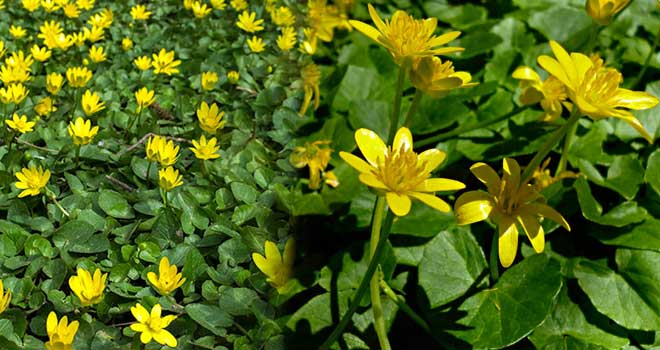
Lesser celandine (Ficaria verna sin. Ranunculus ficaria Ranunculaceae)
Other Names: Fig Buttercup, Pilewort
Lesser Celandine, a perennial carpeting forest floors, grassy shores, and meadows across Europe, features heart-shaped, bright green leaves on long stalks and long, swollen roots. Its shimmering golden-yellow flowers bloom in spring. Traditionally used for hemorrhoids, it has a long history in herbal medicine.
Parts for Use
Whole Plant
- Harvested in spring at full bloom and dried in a shady spot.
- Used in pharmaceutical creams, ointments, and suppositories.
Ingredients
Lesser Celandine is rich in heterosides, particularly saponins like protoanemonin, which constrict blood vessels but act as an irritant. It also contains essential oil, tannins, and vitamin C.
Use in Treatment
Lesser Celandine’s astringent and soothing properties make it suitable for external use only, particularly for treating bleeding hemorrhoids. A 1984 study attributes its efficacy in hemorrhoid treatment to saponins. It is also used externally for itching, inflamed skin, and warts. Internal use is prohibited due to the irritant protoanemonin.
Cultivation
Grows well in neutral to alkaline soil, in sun or shade. Plant in a neglected garden area, as it spreads rapidly and uncontrollably.
Preparation and Dosage
For External Use (Hemorrhoids, Itching, Inflamed Skin, Warts)
- Creams, Ointments, or Suppositories: Apply twice daily as per instructions.
Warnings
- Consult a healthcare professional before use.
- Avoid during pregnancy and breastfeeding.
- Do not use internally due to irritant properties.
- Excessive use may cause skin irritation; direct contact with fresh herbs can cause blisters.