Natural Remedies - Healing with Medicinal Herbs
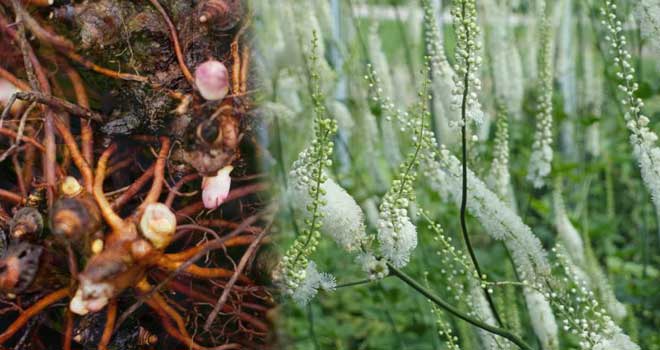
Black cohosh (Actaea racemosa (Cimicifuga racemosa) Ranunculaceae)
Other Names: Fairy Candle, Black Bugbane, Black Snakeroot
Long valued by Native Americans, black cohosh, known as "squaw root," was used to relieve menstrual cramps and childbirth pain. Native to North America, this plant grows freely on hills and in shady areas along forests or wild hedges, reaching heights of two to three meters.
Parts for Use
Roots
- Roots are harvested in the fall when fruits ripen, then chopped and dried.
- Dried roots are used to make powders, tinctures, and dry or liquid extracts.
Ingredients
The roots are rich in compounds that mimic estrogen’s effects. They also contain triterpene glycosides with anti-inflammatory and antioxidant properties, as well as salicylic acid, which acts similarly to aspirin. Tannins in the roots provide antibacterial effects and aid in wound healing.
Use in Treatment
Black cohosh is used to treat women’s health issues, particularly irregular, painful, or heavy menstruation, and to soothe premenstrual tension. A 1998 German study confirmed its effectiveness in alleviating menopausal symptoms, such as hot flashes and depression, though the role of its estrogen-like properties remains unclear. Tablets containing black cohosh extract significantly reduced menopausal symptoms. In 1998, Japanese researchers demonstrated in vitro that piscidic acid in black cohosh affects blood vessels. A 1962 Italian study found that black cohosh dilates blood vessels without adversely affecting blood pressure. In traditional Chinese medicine, it is used for inflammation, pain, and fever. Its anti-inflammatory properties suggest potential use for rheumatism. Black cohosh also has calming effects, aiding in anxiety and restlessness, and has been used as a cough remedy.
Cultivation
Black cohosh thrives in moist, nutrient-rich soil and prefers slightly shaded areas.
Preparation and Dosage
Whether using dry or liquid extracts, powders, or other pharmaceutical preparations, black cohosh treatments should only be undertaken with a physician’s advice and supervision.
Warnings
- Consult a healthcare professional before use.
- Do not use black cohosh during pregnancy or breastfeeding.
- Avoid black cohosh preparations if allergic to aspirin.
- Do not take black cohosh with other medications that lower blood pressure.
- Women with a history of breast cancer or other estrogen-related cancers should avoid black cohosh.
- While most studies indicate black cohosh is safe, some suggest potential liver risks, so use only as prescribed by a doctor.