Natural Remedies - Healing with Medicinal Herbs
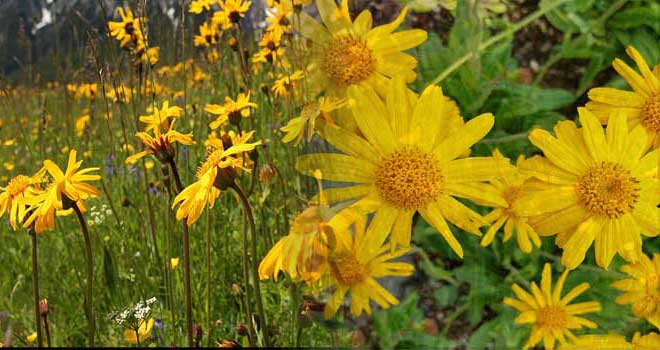
Arnica Montana (Arnica montana Asteraceae)
Other Names: Wolf's Bane, Leopard's Bane, Mountain Tobacco, Mountain Arnica
This perennial plant, native to hilly regions, is recognizable by its bright yellow flower heads, similar to daisies, on tall, hairy stems. Its name likely derives from the Greek word "arnikos," meaning lambskin, due to its hairy leaves. It blooms in summer, with pointed leaves forming a rosette around the plant’s base.
Parts for Use
Flowers
- Flowers are harvested in June and July and dried immediately for use in preparations, primarily tinctures and extracts.
- Arnica contains anti-inflammatory lactones, with helenalin being the most significant for medicinal purposes. It also contains flavonoids that strengthen blood vessels.
Ingredients
Arnika sadržava protuupalne laktone od kojih je za medicinske svrhe najvažniji helenalin. Biljka također sadržava flavonoide koji jačaju krvne žile.
Use in Treatment
Arnica’s primary medicinal use is for treating bruises. Its lactones, particularly helenalin, prevent blood leakage under the skin and reduce inflammation in surrounding tissues. It is also effective for relieving sprains and minor injuries with swelling but no bleeding or skin damage. Studies on rats have shown that helenalin reduces swelling and chronic arthritis. Additionally, arnica is used to treat bacterial and fungal infections. It should never be taken internally, though a homeopathic form is used for injuries and shock.
Cultivation
This hardy plant thrives in well-drained, acidic soil and prefers sunny locations. Harvesting wild arnica is prohibited due to its endangered status in its natural habitat.
Preparation and Dosage
For External Use Only (Bruises)
- Tincture: Apply as a compress to the affected area.
- Creams and Gels: Massage into the affected area as per product instructions, repeating two to three times daily if needed.
Warnings
- Consult a healthcare professional before use.
- Arnica is for external use only; avoid applying near the eyes, mouth, or open wounds.
- If contact with an open wound occurs, wash immediately with distilled water.
- Do not use arnica to treat children under three years old.
- Some arnica ingredients may cause skin allergies.