Natural Remedies - Healing with Medicinal Herbs
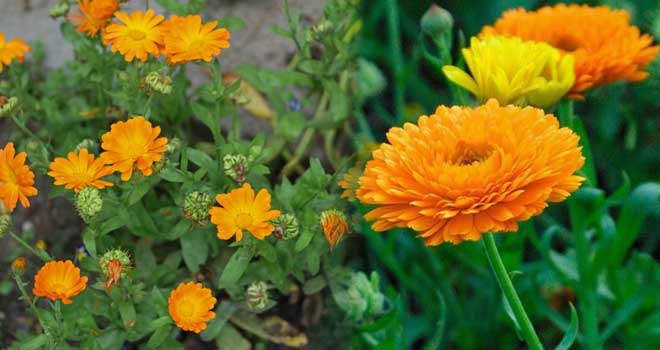
Marigold (Calendula officinalis Asteraceae/Compositae)
Other Names: True Marigold, Common Marigold, Ruddles, Pot Marigold
Marigold, native to the Mediterranean and cultivated across Europe for centuries, is valued for its decorative, culinary, and medicinal properties. The ancient Romans used it in soups believed to lift mood. Its bristly, stiff stalk bears delicate green leaves, with bright orange-yellow flowers blooming from June until the first winter frosts.
Parts for Use
Flowers
- Harvested from June onward as soon as they open, dried in a dark, airy place.
- Used in ointments, gargling water, compresses, and occasionally infusions or tinctures for internal use.
Ingredients
Marigold flowers contain flavonoids, carotenoid pigments responsible for their orange color, and essential oil rich in triterpenoids, which contribute to their anti-inflammatory properties.
Use in Treatment
Marigold is widely used externally for skin ailments like cuts, itching, cracked skin, sunburn, and insect bites, and is a common ingredient in cosmetic preparations. It also treats mouth infections. Studies, including a 1994 Italian study, highlight its anti-inflammatory, antibacterial, antiviral, and antiparasitic properties, attributed to triterpenoids. These compounds help reduce swelling due to fluid retention and calm muscle cramps. Marigold is also known for stopping bleeding.
Cultivation
Marigold is easily grown from seeds sown in spring in well-drained, neutral, or alkaline soil, preferably in a sunny or slightly shaded spot.
Preparation and Dosage
For External Use (Cracked Skin, Cuts, Insect Bites, Sunburn, Mouth Infections)
- Infusion for Skin: Steep 5 dried flowers in 1 liter of boiling water for 5 minutes, strain, and apply as a compress 3–4 times daily.
- Gargling Water for Mouth Infections: Prepare the infusion, let it cool to lukewarm, and gargle 2–3 times daily.
Warnings
- Consult a healthcare professional before use.
- Avoid marigold preparations during pregnancy and breastfeeding.
- Internal use should only occur under physician supervision.