Natural Remedies - Healing with Medicinal Herbs
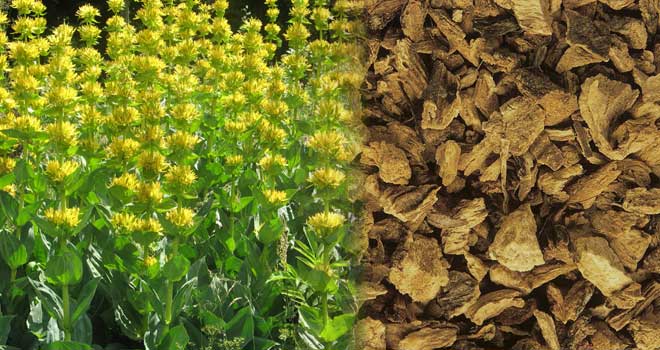
Yellow gentian (Gentiana lutea Gentianaceae)
Other Names: Yellow Heartwood, Great Yellow Gentian
Yellow gentian, a large upright perennial, thrives in the Alps and mountainous regions of southern Europe. It features large leaves with 5–7 prominent veins and striking golden-yellow flowers at leaf-stem junctions. Its thickened, wrinkled roots have a characteristic bitter taste.
Parts for Use
Roots
- Collected in late summer from plants aged 7–10 years.
- Washed, cut, and dried in the open.
- Used for powders, tinctures, or extracts in pharmaceutical products.
Ingredients
The roots contain secoiridoids, primarily amarogentin and gentiopicrosides, which give the bitter taste and stimulate saliva and digestive juice secretion.
Use in Treatment
Yellow gentian’s bitter compounds stimulate saliva and digestive juice secretion, aiding loss of appetite, digestive pains, and slow digestion. A 1967 clinical trial confirmed its ability to enhance digestive juice production. Traditionally used in aperitifs, it strengthens the digestive system and may reduce fever and inflammation.
Cultivation
Grow in well-drained, humus-rich soil in a sunny or slightly shaded location.
Preparation and Dosage
For Internal Use (Digestive Pains, Slow Digestion, Loss of Appetite)
- Infusion: Steep 0.6–2 g dried root in a cup of boiling water for 10 minutes, strain, drink 3 cups daily.
- Medicinal Wines/Syrups: Take 1–4 tbsp before main meals.
- Tincture: Take 2–5 drops in water before meals.
Warnings
- Consult a healthcare professional before use.
- Avoid during pregnancy and breastfeeding.
- Do not use with duodenal ulcers or high blood pressure.
- Excessive use may cause headaches.
- Harvest only by professionals to avoid confusion with toxic hellebore.