Natural Remedies - Healing with Medicinal Herbs
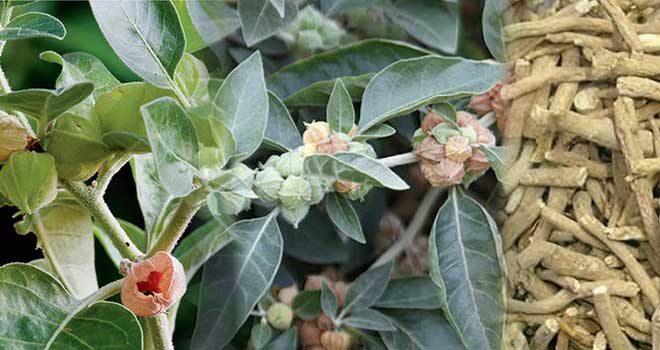
Ashwagandha (Withania somnifera Solanaceae)
Other Names: Indian Ginseng, Poison Gooseberry, Winter Cherry
Native to the tropical regions of India, this shrub grows up to 120 centimeters tall and has been used in traditional Indian medicine for over 2,000 years. Its Sanskrit name translates to "thing that has the smell of a horse," referring to its strength and vitality rather than its odor. Ashwagandha is also reputed as an aphrodisiac due to its beneficial effects on infertility. The plant produces yellowish-green flowers that yield bright red berries.
Parts for Use
Roots
- Roots are harvested in the fall, dried, and crushed for use in decoctions, capsule powders, tinctures, and liquid or dry extracts.
Ingredients
The root contains a steroid called withanolide, which has anti-inflammatory effects, and alkaloids, notably withasomnine, which has soothing properties.
Use in Treatment
Ashwagandha is traditionally prescribed as a strengthening tonic. A 2000 dissertation confirmed its ability to help the body cope with stress. It lowers blood pressure, slows the heart rate, and stimulates the immune system. In Indian medicine, it is used to aid recovery from illness, helping patients overcome fatigue. The plant also treats anxiety and nervous problems and, in higher doses, promotes sleep. A 1991 U.S. study demonstrated that ashwagandha’s ingredients act similarly to the brain’s inhibitory centers, explaining its sedative effects. Its anti-inflammatory components effectively relieve rheumatic joint pain, and its high iron content helps treat anemia.
Cultivation
Plant ashwagandha in dry, rocky soil, preferably in a sunny or slightly shaded location.
Preparation and Dosage
For Internal Use (Fatigue and Rheumatism)
- Decoction: Place 1 to 2 grams of root in a cup of boiling water, cook for 15 minutes, let stand for 10 minutes, strain, and drink two cups daily.
- Tincture (1:3 in 45% alcohol): Add 20 drops to a glass of water and drink three times daily.
For Insomnia, Anxiety, and Nervous Problems
- Capsules (250 mg): Take two to three capsules daily.
Warnings
- Consult a healthcare professional before use.
- Do not use ashwagandha during pregnancy or breastfeeding.
- Avoid if you have an overactive thyroid gland.
- Do not use if you have severe kidney or liver disease.
- Avoid combining with barbiturates or other sedatives.