Natural Remedies - Healing with Medicinal Herbs
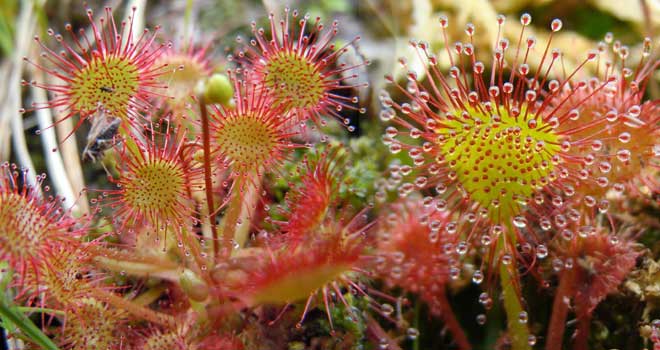
Sundew (Drosera rotundifolia Droseraceae)
Other Names: Round-Leaved Sundew, Common Sundew
Sundew, a small aquatic insectivorous plant, thrives in humid, peaty areas during summer. Its ground-lying leaves, covered with fine, red sticky hairs that trap insects, feature dew-like liquid droplets, giving it its name.
Parts for Use
Whole Plant
- Harvested during flowering from June to September.
- Used fresh, or dried and ground into powder for infusions and tinctures.
- Often combined with other cough-soothing herbs like thyme.
Ingredients
Contains naphthaquinones, notably plumbagin, with antibacterial and antispasmodic effects, and mucilage that soothes inflamed mucous membranes.
Use in Treatment
Sundew has been used in traditional European medicine for dry cough and lung diseases. Its key compound, plumbagin, identified in a 1993 Swiss study, offers antispasmodic effects in the respiratory and intestinal tracts. Effective for bronchitis, whooping cough, dry or nervous cough, and conditions with thick mucus, it’s often used in syrups with herbs like thyme. Plumbagin also inhibits bacteria like streptococci, staphylococci, and pneumococci, enhancing its efficacy against lung infections. Externally, fresh sundew juice is a potent remedy for warts.
Cultivation
Grow from seeds in wet, peaty soil in a very sunny location.
Preparation and Dosage
For Internal Use (Bronchitis, Dry Cough, Whooping Cough)
- Infusion: Steep 1–2 g dried herb in a cup of boiling water for 10 minutes, strain, drink 3 cups daily.
For External Use (Warts)
- Fresh Juice: Apply directly to warts 1–2 times daily.
Warnings
- Consult a healthcare professional before use.
- Avoid during pregnancy and breastfeeding.
- Do not take on an empty stomach.
- May cause nausea or bloody diarrhea.
- Can irritate skin and mucous membranes.
- Generally safe when combined with other herbs in therapeutic doses.