Natural Remedies - Healing with Medicinal Herbs
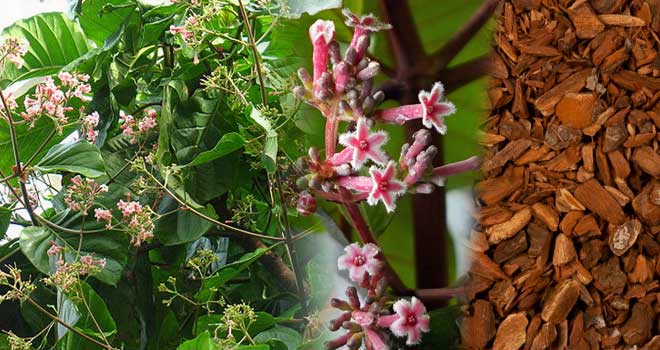
Cinchona (Cinchona succirubra Rubiaceae)
Other Names: Red Cinchona, Quina, Jesuit's Bark
Cinchona is a tree native to South America, capable of growing over 20 meters tall. It has elliptical leaves with reddish undersides and bright pink flowers. The bark’s outer layer is brownish-gray, while the inner layer is reddish-brown. In the 17th century, Jesuit missionaries discovered its antimalarial properties, leading to its historical use as "Jesuit's bark."
Parts for Use
Bark
- Bark is collected in autumn from trees older than six years.
- Once dried, it is crushed and used in tinctures, dry extracts, decoctions, and medicinal wines.
Ingredients
Cinchona bark contains 5–15% alkaloids, primarily quinine and quinidine, along with about 8% tannins and bitter quinine compounds.
Use in Treatment
Quinine, a potent antimalarial agent, is derived from cinchona bark and should only be used under medical supervision for malaria treatment. Quinine and quinidine act as antispasmodics, potentially relieving muscle cramps, though recent Australian research suggests a risk of subcutaneous bleeding. Quinidine is used in conventional medicine to treat arrhythmias. The bitter quinine in the bark stimulates digestive juices, aiding indigestion and increasing appetite, which may benefit those with nervous exhaustion, fever, or flu. Cinchona is often combined with fever-reducing herbs like willow or meadowsweet. Its antibacterial properties and tannins make it effective externally for itching, pressure ulcers, and long-lasting wounds.
Cultivation
Cinchona can be grown in greenhouses or as a potted plant on a sunny windowsill.
Preparation and Dosage
For Internal Use (Indigestion, Loss of Appetite, Nervous Exhaustion, Fever, Flu)
- Tincture (1:5 in 25% alcohol): Add 2–4 ml to a glass of water and drink three times daily.
- Medicinal Wine: Take 1–2 tablespoons daily.
- Infusion (Fever and Flu): Add 0.5 grams of sliced bark to a glass of water, boil for 3 minutes, let stand for 10 minutes, sweeten to taste, and drink three cups daily, 1.5 hours before meals.
For External Use (Itching, Pressure Ulcers, Long-Lasting Wounds)
- Decoction: Boil 30 grams of cut bark in 1 liter of water for 5 minutes, then wash affected areas 1–2 times daily.
Warnings
- Consult a healthcare professional before use, especially for malaria or arrhythmia treatment.
- Avoid cinchona if taking anticoagulants, as it may enhance their effects.
- Do not use during pregnancy, breastfeeding, or if allergic to quinine or quinidine.
- Cinchona may reduce the effectiveness of medications for gastrointestinal ulcers.